





Antoine Varraso
In this article:
Law firm lead generation turns searches into calls, forms, and bookings from prospective clients, then into signed cases. On Google Ads, the fastest way to halve your cost per lead is not a bigger budget: it is a landing page that converts twice as many clicks, backed by tight keywords, call tracking, and fast intake.
Below: the cost per lead math, the six levers we use on client accounts, and what the ABA Model Rules allow when you buy leads. For the full campaign setup, see our Google Ads guide for law firms.
How much does a law firm lead cost?
The cost per lead formula
Your cost per lead is your ad spend divided by the leads it produced. On Google Ads, you pay for the click, not the call: a click only means someone opened your page.
In WordStream's 2026 Google Ads benchmarks, based on 13,474 US search campaigns, attorneys and legal services had the highest median cost per click of any industry ($9.87), a 5.55% conversion rate, and the highest cost per lead, $131.63.
Why the conversion rate is the lever that halves it
Take a hypothetical criminal defense firm paying $30 per click on "DUI attorney" searches. One hundred clicks cost $3,000. The result depends on how many visitors call or fill out a form:
| Landing page conversion rate | Leads from 100 clicks | Cost per lead |
|---|---|---|
| 5% (close to the legal median) | 5 | $600 |
| 10% | 10 | $300 |
Same budget, twice the leads, or the same leads for half the budget. The click price barely moves; the conversion rate does.
Lead vs. signed case: which number should you manage?
What counts as a lead
A lead is a prospective client who raised a hand: a real phone call, a completed form, or a booked consultation. A qualified lead matches your practice area, location, and the cases you accept. A signed case is a lead who signed your engagement letter. Only the last one pays the rent, so track all three stages: a cheap lead from a job seeker or an out-of-state caller is worth nothing.
From cost per lead to cost per signed case
Divide your ad spend by your signed cases to get your real acquisition cost. At $300 per lead and one lead in three signed, each client costs $900. Compare that with your average fee per case. A $150 lead that never signs costs more than a $400 lead that hires you.
How to generate cheaper leads before the click
Tighten match types and negative keywords
Every irrelevant click raises your cost per lead. Start with exact match keywords, such as [truck accident lawyer atlanta], open up to phrase match once the landing page converts, and use broad match only when conversion tracking feeds Smart Bidding enough data.
Review the search terms report every week and add negative keywords: "jobs," "salary," "paralegal," "law school," "legal aid," and "pro bono" are the usual suspects. See our guide to keyword research for lawyers.
Add Local Services Ads, Google's pay-per-lead format
With Local Services Ads, Google charges per valid lead instead of per click. A valid lead includes a call you answer or return, a missed call of 20 seconds or more, a message, a voicemail, or a booking request. Google reviews lead quality over 30 days and automatically credits leads it finds poor quality, duplicate, or invalid.
Prices vary with your location, case type, and bidding mode, so this format is not automatically cheaper. Run it alongside search campaigns and compare the cost per signed case on each side.
Landing pages: the lever that cuts cost per lead in half
After more than $550,000 in ad spend for our law firm clients in France, one pattern stands out: the page behind the ad decides your cost per lead more than any bid. On those accounts, dedicated landing pages convert around 14% of clicks into calls, about double the 6.98% legal rate in WordStream's earlier benchmark.
One page per case type, two choices only
Never send paid clicks to your homepage: it offers a dozen paths, and a visitor with an urgent legal problem takes none of them. Build one landing page per case type, with two options only: contact you, or leave. Remove the menu. Visitors who want your full background can still find it on Google.
Match the page to the promise. A generic page after a specific ad feels like ordering a coffee and being handed the menu again. An ad about truck accidents leads to a page about truck accidents, not personal injury in general. Our law firm landing page guide details the structure.
Sell the outcome, then prove it with reviews
"Twenty years of experience, award-winning, Ivy League degree" is about you. Visitors care about their problem. Answer three questions instead:
- What result do they want? An employee wants a fair severance package.
- How will you get there? You review the agreement and negotiate hard with the employer.
- What does life look like after? A fresh professional start.
Under Rule 7.1, describe the outcome they seek, never promise it. Then add proof: ask satisfied clients for a review that says what problem they had, why they chose you, what you did, the result, and how it changed their life. A Google reviews widget shows the stars without pulling visitors off the page. Check your state's rules on client testimonials first.
A/B test the message before you scale
A/B testing splits your traffic between two versions of a page and shows which one produces more calls. On a family law page, we would test a positive message against an avoidance message:
- "Get back to a calm family life"
- "Keep things from getting worse for your family"
Test one element at a time, the headline first, and let each version collect enough clicks before you pick a winner.
After the click: call tracking, intake speed, and offline conversions
Track every call back to its source
Most legal leads come by phone, so tracking forms alone misses the majority. Turn on call reporting so calls from your ads go through a Google forwarding number, add a website call conversion that swaps the number on your landing page, and set a minimum call duration so a 10-second wrong number does not count. Then log the source of every lead in your law firm CRM.
Answer within the hour, ideally within minutes
In a study of 1.25 million sales leads published in Harvard Business Review, companies that tried to reach a lead within an hour were nearly seven times as likely to qualify it as those that tried an hour later, and more than 60 times as likely as those that waited a day or more.
Law firms are slow. For its 2019 Legal Trends Report, Clio emailed 1,000 firms as a prospective client: 60% never answered. Of the firms it phoned, 27% could not be reached. Yet 42% of consumers said that if they liked the first lawyer they spoke with, they would not talk to any others. Our guide to client intake automation shows how to close that gap.
Import signed cases into Google Ads
By default, bidding optimizes for calls and forms. With offline conversion imports, you send back the leads that became clients, matched by Google click ID or by hashed email addresses through enhanced conversions for leads. Bidding then learns to find people who sign. Send hashed identifiers only, never case details, to respect your confidentiality duty under Rule 1.6.
Should you buy leads from attorney lead generation services?
Lead generation for lawyers is a business in itself: DataForSEO estimates the cost per click on the search "law firm lead generation" alone at around $137. Buying leads fills a calendar fast, but you lose control over what those prospective clients were told.
How lead vendors sell leads
Vendors sell shared leads, passed to several firms at once, or exclusive leads, sold to you alone at a higher price. Others charge per call or sell directory listings. With a shared lead, the first firm to call back has the best chance of signing the client.
What ABA Model Rule 7.2 allows
Rule 7.2(b) bars paying anyone to recommend you, except for the reasonable cost of advertising and a few listed cases. Comment [5] then allows you to pay for client leads under three conditions:
- the lead generator does not recommend you, meaning it does not vouch for your credentials or abilities;
- the payment respects Rules 1.5(e) and 5.4, so no share of your legal fees goes to a nonlawyer;
- its communications comply with Rule 7.1: it cannot imply that it recommends you, that you did not pay for the referral, or that it analyzed the person's legal problem to pick a lawyer.
Rules 5.3 and 8.4(a) make the vendor's conduct your responsibility, and some states add their own lead generator rules. Our guide to lawyer advertising rules covers the state differences.
Questions to ask before you buy
- Can you see the ads and pages the consumer saw?
- Are the leads exclusive or shared, and with how many firms?
- Is the price a flat fee per lead, or tied to your fee?
- Are invalid leads refunded or credited?
Then judge vendor leads like your own: on cost per signed case.
What our clients' campaigns returned
Two campaigns we ran for law firms in France, converted to dollars. French clicks cost less than in most US markets: read them as proof of the method, not as US benchmarks.
Criminal defense in Paris: $105 per lead, $210 per client
$630 in ad spend brought 64 qualified visitors, 6 calls, and 3 signed clients in 7 days, for $8,250 in fees. That is $105 per lead and $210 per signed client. See how that campaign was built.
Employment law in Lyon: under $77 per lead
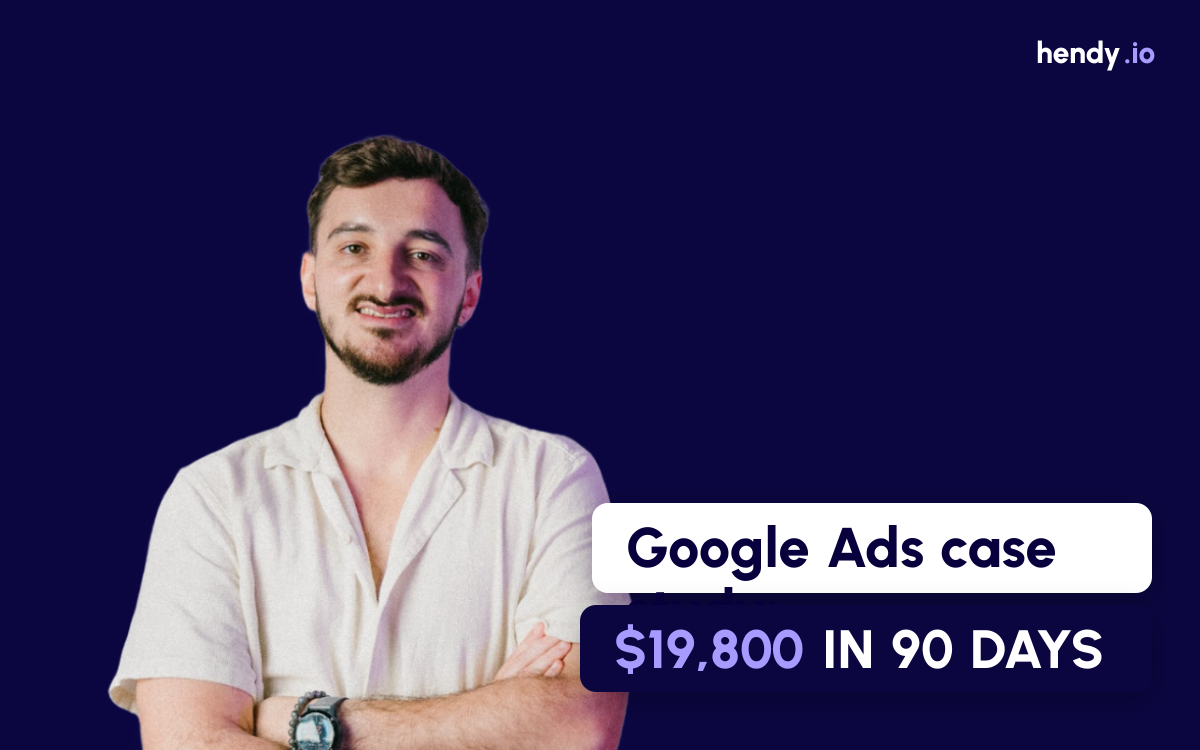
With $2,750 a month in ad budget, the cost per lead stayed under $77, and the firm generated $19,800 in fees over 90 days. Read the employment law case study.
The bottom line on lead generation for lawyers
Buying keywords is necessary, not sufficient. Halving your cost per lead comes from what happens around the click: clean keywords before it, a focused landing page on it, and fast, tracked intake after it. Then manage the number that pays the bills: cost per signed case.
Want us to audit your cost per lead? See our law firm Google Ads agency or contact us.
Frequently asked questions
-
Most law firms combine referrals, SEO, Google Ads, Local Services Ads, directories, and sometimes paid lead generation services. For paid search, four things drive results: tight keywords with negatives, one landing page per case type, call tracking, and an intake team that answers within the hour. Judge every channel on its cost per signed case.


"Premium Divorce Austin"↗


4.8 based on 30+ clients




Only 5
law firms per year
Imagine 50% of your revenue coming from Google.
Position your law firm smartly in search results with our SEO and Google Ads expertise. See how we deliver stable, predictable results over time, all in an automated way.